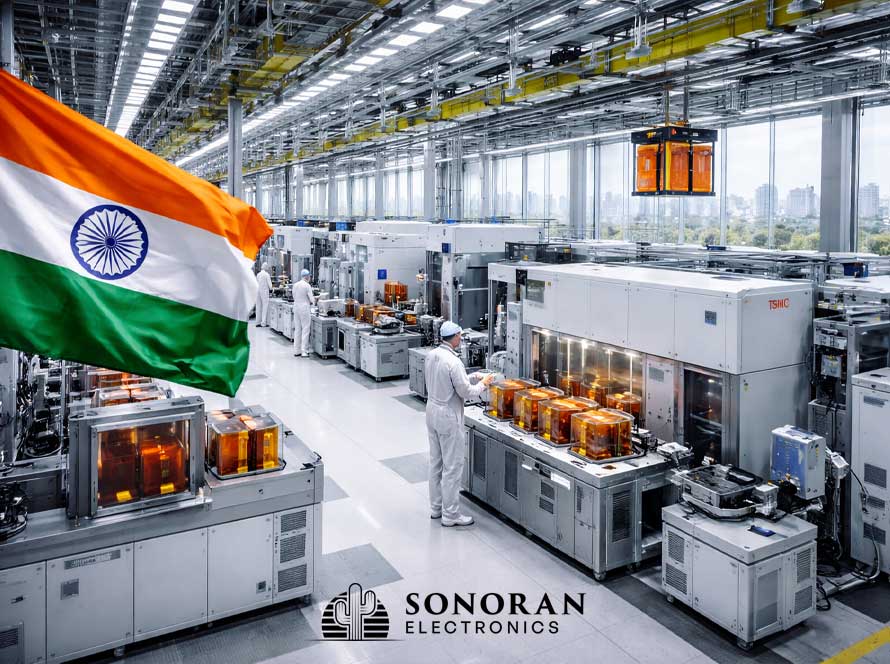
For decades, the semiconductor industry has been defined by silicon—its processing, scaling, and fabrication. Supply chain analysis followed the same logic, focusing on wafer capacity, node advancement, and foundry output. That framework is becoming insufficient. As electronic systems grow more complex, the constraints shaping availability are increasingly found outside the silicon layer, in the materials, chemicals, and infrastructure that enable semiconductor production at scale.
This expansion reflects a shift in where value and risk reside. Modern semiconductor manufacturing depends on a wide array of inputs that extend far beyond silicon wafers. Specialty chemicals, rare earth elements, industrial gases, and advanced materials all play critical roles in fabrication, packaging, and system integration. Each of these inputs introduces its own supply dynamics, often governed by industries and geographies that operate independently of the semiconductor sector.
One of the defining characteristics of these inputs is their concentration. Rare earth elements, for example, are extracted and processed in a limited number of regions, creating exposure to geopolitical and environmental factors. Similarly, high-purity chemicals used in lithography and etching are produced by a small group of specialized suppliers. Disruptions in any of these areas can propagate through the semiconductor supply chain, affecting production in ways that are not immediately visible at the chip level.
Industrial gases illustrate this dependency with particular clarity. As previously discussed in the context of helium, these gases are integral to fabrication processes yet are sourced from supply chains that are not easily scaled in response to semiconductor demand. Neon, argon, and other gases used in lithography and deposition processes exhibit similar characteristics, where availability is tied to broader industrial production rather than semiconductor-specific capacity planning.
Logistics and infrastructure add another layer of complexity. Semiconductor production relies on highly coordinated global supply chains, where materials and components move across multiple regions before reaching final assembly. Ports, shipping networks, and transportation systems become critical links in this chain. Disruptions at this level—whether due to congestion, regulatory changes, or geopolitical tensions—can introduce delays that ripple through the entire system.
The expansion beyond silicon also changes how constraints manifest. In traditional models, shortages were often associated with specific components or nodes, allowing for targeted mitigation strategies. In the current environment, constraints are more diffuse. A limitation in chemical supply, for example, may affect multiple stages of production simultaneously, reducing overall throughput rather than creating a discrete shortage. This makes it more difficult to isolate and address the source of the problem.
From a procurement perspective, this shift requires a broader scope of analysis. Evaluating suppliers based solely on their direct outputs is no longer sufficient. Buyers must consider the upstream dependencies that enable those outputs, including access to raw materials, energy, and infrastructure. This often involves engaging with tiers of the supply chain that were previously outside the scope of procurement strategies.
There is also a strategic dimension to this expansion. As materials and inputs become more critical, they are increasingly viewed through the lens of national security and economic policy. Governments are implementing measures to secure access to key resources, support domestic production, and reduce reliance on external suppliers. These initiatives can alter supply dynamics, introducing new constraints or opportunities depending on how they are structured.
Pricing is another area where the impact is becoming evident. As demand for specialized materials increases and supply remains constrained, costs are rising. These increases are being absorbed across different stages of the supply chain, ultimately affecting the price of finished components. Unlike cyclical price fluctuations, these changes are tied to structural shifts in demand and may persist over longer periods.
The broader implication is a redefinition of what constitutes the semiconductor supply chain. It is no longer a linear sequence from design to fabrication to assembly. It is a network of interdependent systems, each with its own constraints and dynamics. Silicon remains central, but it is only one part of a larger ecosystem that determines availability and performance.
Looking ahead, the expansion beyond silicon is likely to continue as technologies evolve and new materials are introduced. Advanced packaging, optical interconnects, and next-generation memory all rely on inputs that extend further into material science and specialized manufacturing. Each addition increases the complexity of the supply chain and the number of variables that must be managed.
For decision-makers, the conclusion is direct. Managing semiconductor supply is no longer about securing chips alone. It requires an understanding of the full ecosystem that supports their production, from raw materials to global logistics. Organizations that adapt to this broader perspective will be better positioned to anticipate constraints and respond effectively in an environment where the boundaries of the supply chain are continuing to expand.